The shift to digital assessments has fundamentally changed how educational institutions evaluate student knowledge. Students now complete high-stakes examinations from home, earn professional certifications remotely, and pursue fully online degree programs with the same academic rigor as traditional programs. Yet this transformation brings a critical challenge: how do institutions maintain exam integrity when students aren’t physically present in monitored testing centers? Remote exam proctoring has emerged as the solution, but it raises equally important questions about student privacy, surveillance ethics, and appropriate boundaries of digital monitoring. Finding the right balance between academic security and respect for individual privacy defines the future of credible online education.
Understanding Security Challenges in Remote Exams
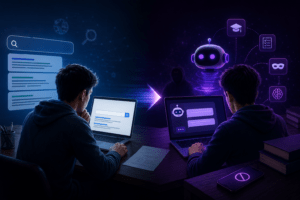
Remote exams face security vulnerabilities that don’t exist in traditional testing environments. Without physical oversight, students have access to unauthorized resources during examinations. Web searches provide instant answers. Messaging apps enable real-time collaboration. Screen-sharing technology enables impersonation schemes in which someone else takes the exam entirely. Academic integrity violations in unproctored online assessments occur at significantly higher rates than in-person exams.
The consequences of compromised exam security extend beyond individual cheating. When employers lose confidence in online credentials, all learners suffer. A nursing certification earned through unsecured remote exams undermines public trust in healthcare professionals. An engineering degree with weak online assessment security devalues honest students’ achievements. Secure online testing isn’t just about catching cheaters; it’s about protecting the credibility of educational credentials. This makes robust proctoring technologies essential infrastructure for institutions offering remote assessments.
Proctoring Technology Solutions: What Schools Need to Know
Online proctoring solutions offer several approaches with varying levels of monitoring. Live proctoring involves human proctors monitoring students via webcam in real time, providing the highest security but at a high cost and with complex scheduling. Automated proctoring uses AI to analyze student behavior and flag potential violations for later review. This approach offers scalability and cost-effectiveness while maintaining strong security. Record-and-review proctoring captures the entire exam session for post-exam analysis, balancing flexibility with oversight.
Each proctoring technology has distinct trade-offs. Live proctoring offers immediate intervention but requires extensive human resources. Automated proctoring scales efficiently to thousands of simultaneous test-takers but may generate false positives requiring human review. Record-and-review provides flexibility across time zones but delays the detection of violations. Hybrid approaches combining AI monitoring with human review often provide an optimal balance, leveraging technology’s efficiency while preserving human judgment for final decisions.
When evaluating proctoring technologies, schools must consider student experience alongside security. Systems requiring complex software installations or multiple camera angles create accessibility barriers for disadvantaged students. Technologies performing poorly for students with disabilities or diverse physical appearances risk perpetuating inequities. The best proctoring solutions prioritize both security and inclusivity.
Navigating Student Privacy in Remote Exam Monitoring
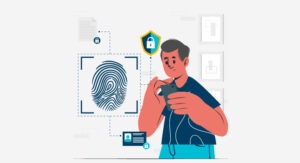
Student privacy represents the most contentious aspect of remote exam proctoring. Monitoring technologies often require webcam access, screen recording, keystroke logging, and, in some cases, room scans. For students, this feels invasive, inviting institutional surveillance into personal living spaces during stressful assessments. Privacy concerns are legitimate, especially given instances where proctoring companies mishandled student data or employed overly aggressive monitoring.
Responsible proctoring implementation requires clear boundaries around data collection. Students deserve transparency about exactly what data is collected, how it’s analyzed, who has access to it, and when it’s deleted. Proctoring systems should collect only data essential for exam integrity. Video recordings should be encrypted, stored securely, and deleted after defined retention periods. Access should be strictly limited to authorized personnel with legitimate educational purposes.
Privacy-conscious institutions provide clear communication about proctoring requirements well before exam day. Students should never be surprised by monitoring requirements. Advanced notice allows students to prepare appropriate testing environments and raise concerns about privacy or accessibility before the stakes are high. Some institutions offer alternatives for students with significant privacy concerns, such as in-person testing options, demonstrating that exam security and respect for student autonomy can coexist.
Building Trust in Digital Assessment
The goal isn’t maximum surveillance, it’s a credible assessment that respects student dignity. Institutions should implement the minimum monitoring necessary to ensure exam integrity. A low-stakes quiz doesn’t require the same security as a final certification exam. Risk-based approaches that calibrate proctoring intensity to actual security needs demonstrate both wisdom and respect for students.
Stakeholder engagement strengthens proctoring policies. Students, faculty, disability services, and IT security should contribute to decisions about remote exam monitoring. Student input reveals privacy concerns administrators might miss. Faculty perspective helps calibrate security measures to actual cheating risks. This collaborative approach produces policies that are both effective and ethically sound.
Remote exam proctoring will continue evolving as online education becomes mainstream. Institutions that succeed will view proctoring not as surveillance but as essential infrastructure for credible credentials. They’ll implement secure online testing solutions that protect exam integrity while respecting student privacy. They’ll choose proctoring technologies based on both effectiveness and ethical considerations. The future of education isn’t a choice between exam security and student privacy; it’s finding the responsible intersection where both coexist. Schools that get this balance right won’t just prevent cheating, they’ll build the trust essential for online credentials to carry the same weight as traditional degrees.