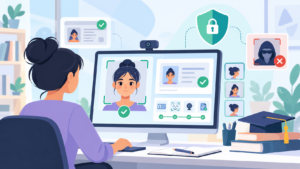
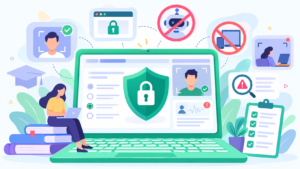
A student logs into an online examination using the correct university credentials. Their name appears on the screen, and the exam begins.
But how does the institution know the person taking the test is actually the enrolled student?
A password confirms access to an account. It does not always confirm who is using it.
For universities, certification providers, and examination teams, this creates an important security challenge. If someone takes an exam on another person’s behalf, even a well-designed assessment may produce an unreliable result.
Online exam identity verification helps institutions establish confidence that the correct candidate is taking the assessment. However, not every verification solution offers the same level of security, reliability, or student experience.
Before choosing a solution, institutions should ask seven important questions about how candidate authentication works, how impersonation risks are managed, and whether the process supports fair, secure examinations.
Why Is Identity Verification Important for Online Exams?
Traditional examination halls allow invigilators to check student identification and observe candidates during the assessment.
Remote examinations require institutions to establish that confidence without physical supervision.
A candidate might share login details, attempt to use another person’s identity, or arrange for a proxy test-taker to complete an assessment.
These risks are different from using unauthorized notes or searching for answers.
A secure browser can restrict activities on a computer, but it cannot establish a candidate’s identity on its own.
For universities, the concern goes beyond examination misconduct. Identity verification helps protect academic records, qualifications, and confidence in assessment results.
In the United States, 34 CFR § 602.17 addresses institutional processes for verifying that students participating in distance education are the individuals receiving academic credit. It also addresses student privacy and disclosure of additional identity-verification charges.
Understanding three terms helps:
- Identity verification: Checking evidence to establish that a candidate is who they claim to be.
- Authentication: Confirming that someone accessing the examination system has the required credentials.
- Ongoing identity assurance: Maintaining reasonable confidence that the authorized candidate remains responsible for the examination session.
A reliable solution should make these distinctions clear.
1. How Does the Solution Verify That the Candidate Is the Right Person?
The first question is simple: What evidence does the system use to confirm the candidate’s identity?
Some solutions rely mainly on university login credentials. Others support identity document checks, institutional records, or additional verification procedures.
For example, an institution may require students to present an approved identification document before starting an examination.
However, collecting an identification document is not the same as confirming that it belongs to the person taking the test.
Institutions should understand exactly how identification evidence is reviewed and connected to the registered candidate.
They should also consider students who cannot provide the requested form of identification.
What to ask the provider:
- Which identity verification methods are supported?
- Can candidate details be checked against institutional registration records?
- What is the process for reviewing identification documents?
- What alternatives are available when a candidate cannot provide an accepted ID?
What a strong answer looks like: A clearly documented verification process, reliable checks against authorized candidate information, and appropriate alternatives when standard verification cannot be completed.
2. Can the Institution Maintain Confidence in Candidate Identity Throughout the Exam?
An identity check at the beginning of an examination is useful, but what happens afterward?
Consider a hypothetical two-hour examination.
A registered student completes the initial verification and begins the test. Later, someone else attempts to take over the examination.
A one-time identity check may not provide enough information to identify this change.
This is why institutions should evaluate the examination monitoring and supervision procedures that follow authentication.
Depending on the solution and the examination’s security level, these may include live proctor supervision, session monitoring, authorized review of examination recordings, and established procedures for investigating an unexpected change in the testing environment.
However, monitoring has limitations.
A temporary camera interruption, internet problem, or student absence should not automatically be treated as impersonation.
Institutions need a clear process for reviewing uncertain events.
What to ask the provider:
- What monitoring is available after the initial identity check?
- How are suspected candidate substitutions investigated?
- What happens if a candidate leaves and returns to the examination?
- Can an authorized reviewer examine relevant session evidence?
What a strong answer looks like: A documented supervision process, clear incident escalation rules, and reliable human review before any serious misconduct decision.
For more context, explore Proctortrack’s online exam identity verification resources.
3. How Does the Solution Reduce Candidate Impersonation and Unauthorized Access?
Identity verification should be evaluated as part of a wider examination security strategy.
Even when institutions require student credentials and approved identification, unauthorized access remains a concern.
A student may share account credentials with another person. Someone may attempt to use another candidate’s examination access or present misleading identification information.
Institutions should understand how an examination platform connects access credentials, candidate records, and supervision procedures.
For example, a solution may use institution-controlled authentication followed by a separate candidate identity check.
A secure testing environment may also restrict unauthorized software or activities while the examination is in progress.
These measures address different risks and should not be treated as interchangeable.
What to ask the provider:
- How does the system prevent unauthorized examination access?
- Can authentication be connected to the institution’s existing student accounts?
- How are mismatches between candidate details and registration records handled?
- What evidence is available when impersonation is suspected?
- Which impersonation risks remain outside the system’s control?
What a strong answer looks like: A layered process combining authorized account access, candidate identity checks, secure examination controls, and procedures for reviewing suspected impersonation.
Be cautious when a provider suggests that one security feature can eliminate every form of examination fraud.
4. What Happens When Identity Verification Fails?
Even a well-designed verification process can encounter problems.
An identification document may be unclear. Student records may contain outdated information. A candidate may have difficulty completing the required steps because of connectivity or device limitations.
If the process fails, should the student automatically lose access to the examination?
No. Institutions need a fair way to resolve uncertain identity checks.
This may involve repeating a verification step, requesting alternative identification evidence, contacting an examination administrator, or referring the case to an authorized reviewer.
An unsuccessful identity check is not the same as proven impersonation.
It simply means the institution has not yet established identity with sufficient confidence.
Universities should define their response before examinations begin, especially for timed or high-stakes assessments.
What to ask the provider:
- Can candidates repeat an unsuccessful verification?
- Is assistance available when a student cannot complete the process?
- Can institutions provide alternative verification arrangements?
- Who decides whether the examination can continue?
- How are verification failures documented?
What a strong answer looks like: A documented fallback process, trained support personnel, reasonable response procedures, and clear responsibility for final decisions.
An effective solution should protect examination integrity without unnecessarily excluding legitimate candidates.
5. How Does the Solution Protect Student Identity Information and Privacy?
Identity verification may involve collecting personal student information.
Depending on the process, this can include names, student registration details, identification documents, verification records, and examination-related evidence.
Institutions need to understand exactly what information is collected and why.
They should also know where it is stored, who can access it, how long it is retained, and what happens when it is no longer required.
For U.S. institutions, the Family Educational Rights and Privacy Act (FERPA) provides an important framework for protecting student education records.
Privacy obligations depend on the institution’s location, applicable laws, contractual arrangements, and the type of information processed.
Before selecting a solution, universities should review its privacy documentation and data-handling terms.
What to ask the provider:
- What student information is collected during identity verification?
- Where is the information stored?
- Who can access identification records and examination evidence?
- How long is information retained?
- Can the institution establish appropriate retention and deletion procedures?
- How does the provider protect information from unauthorized access?
What a strong answer looks like: Clear privacy policies, appropriate access controls, defined retention periods, documented security practices, and transparent data-handling procedures.
Institutions should collect only the information needed for a legitimate examination purpose.
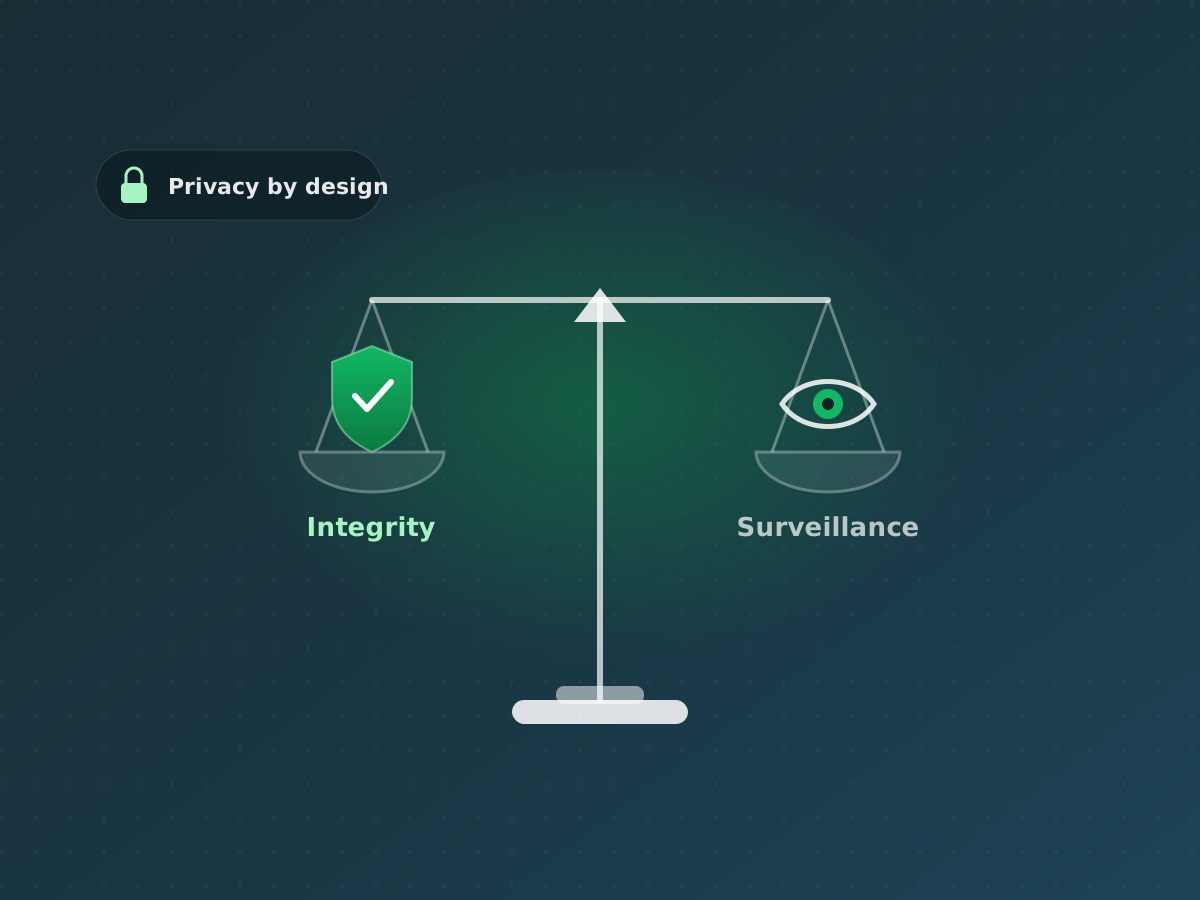
Trustworthy identity verification should protect both examination integrity and student privacy.
6. Is Candidate Authentication Accessible and Easy to Use?
A secure identity verification process must also work for the students who use it.
An examination system may have strong security controls but still create problems if candidates cannot complete authentication independently or with approved assistance.
Students may experience difficulties because of disabilities, older devices, limited internet access, unfamiliar technology, or unclear verification instructions.
A university should not assume that every candidate has the same equipment or testing environment.
Accessibility must therefore be part of the evaluation process.
The Web Content Accessibility Guidelines (WCAG) 2.2 provide an important reference for assessing digital accessibility.
Institutions should test the authentication workflow with relevant assistive technologies and approved examination accommodations.
Integration matters as well.
If students already access examinations through Canvas, Moodle, Blackboard, or D2L Brightspace, the identity verification process should fit the institution’s approved workflow wherever practical.
Repeated logins, unfamiliar screens, and unnecessary setup requirements may increase confusion and support requests.
What to ask the provider:
- Can students complete verification using approved assistive technologies?
- Are alternative authentication methods available when needed?
- Does the solution integrate with the institution’s LMS?
- What happens when internet connectivity fails during verification?
- Can students complete a practice identity check before an important examination?
What a strong answer looks like: An accessible workflow, clear instructions, practical alternatives, reliable integration, and dependable student support.
The aim is not simply fast authentication. It is reliable verification that authorized students can complete fairly.
7. Can the Institution Measure Security, Operational Performance, and Total Cost?
The final question connects identity verification to institutional outcomes.
A solution may appear effective during a demonstration but become difficult to manage across hundreds or thousands of examinations.
Universities need to evaluate both security and day-to-day operations.
Consider the work involved in reviewing verification failures, answering student questions, investigating suspected impersonation, and managing appeals.
These activities create costs even when they are not included in the advertised software price.
Institutions should also understand how identity verification records can support examination investigations.
For example, if a candidate disputes a verification decision, an authorized reviewer may need to examine the relevant records, system events, and administrator notes.
A failed verification or unexplained alert should not be treated as proof of misconduct.
What to ask the provider:
- How long does candidate verification usually take?
- How are unsuccessful verification attempts recorded?
- What information is available for authorized examination reviews?
- Can the institution track verification problems and support requests?
- What additional costs apply to manual reviews, integrations, or technical assistance?
- Can the solution support examinations across multiple departments?
What a strong answer looks like: Transparent reporting, useful verification records, reliable support processes, and a clear understanding of the total cost of operation.
The lowest advertised price may not represent the best long-term value.
A Practical Identity Verification Checklist Before Making a Decision
Before selecting a provider, universities should consider running a pilot using approved institutional workflows and authorized test participants.
The pilot should test more than a successful student login.
| Test scenario | What the institution should confirm |
|---|---|
| A registered student completes verification | Ease of use and correct connection to institutional records |
| An unauthorized person attempts to access an examination | Authentication restrictions and identity review procedures |
| Student identification information is incomplete | Error handling and fallback options |
| A student requires an accommodation | Accessible verification alternatives |
| An examination session is interrupted | Session recovery and appropriate identity checks |
| A student disputes a verification decision | Evidence quality and human review |
| Multiple departments conduct examinations | Integration, support capacity, and operational reliability |
During the pilot, institutions should record measures such as successful verification rates, average check-in times, manual review requirements, support requests, and student feedback.
Before full deployment, define the essential requirements.
For example, a solution without an acceptable privacy arrangement or workable accessibility alternatives should not be approved solely because it offers fast verification.
The best solution is not necessarily the one with the longest list of features. It is the one that provides reliable identity assurance while remaining fair, manageable, and accountable.
How Proctortrack Supports Online Exam Identity Verification
Proctortrack helps institutions approach candidate identity verification as part of a wider examination integrity process.
Its online proctoring offering includes candidate verification workflows, secure testing environments, examination monitoring, and options for automated or live supervision.
These measures help institutions evaluate who is accessing an examination, how the examination environment is controlled, and how events can be reviewed when concerns arise.
Proctortrack also supports integration with learning management systems, helping institutions connect examination security to their existing digital learning workflows.
The appropriate verification and supervision procedures depend on the institution’s requirements, selected service configuration, student needs, and examination risk level.
Institutions should confirm the exact functionality available through product documentation and a practical demonstration.
Final Thoughts: Trust Begins With Verifying the Right Candidate
A secure examination is not only about preventing unauthorized access to information.
It is also about establishing reasonable confidence that the correct person completed the assessment.
Strong online exam identity verification requires more than a password or a basic login check.
Institutions must understand how candidate identity is established, how concerns are investigated, and how student information is protected.
The seven questions in this guide can help university leaders evaluate these responsibilities before choosing a solution.
Because an exam result can only be trusted when the institution has reasonable confidence in who earned it.
Explore Proctortrack’s approach to online proctoring and examination security to learn how candidate authentication and layered exam security can support institutional assessment needs.