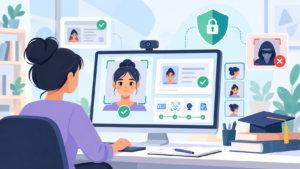
The rise of online education has brought convenience and flexibility, but it has also opened doors to sophisticated cheating tactics. Hence with students finding innovative ways to bypass exam security, the integrity of online assessments is at risk. Proctortrack is at the forefront of combating this challenge, using cutting-edge technologies like the PEBble browser and dual-camera setups to maintain the integrity of online exams. This blog explores the high-tech methods students use to cheat and how online proctoring solutions are evolving to counter these tactics.
1: Screen Sharing and Remote Access Tools
One of the most common cheating methods involves screen sharing and remote access tools. Students can use software like Zoom, Skype, or TeamViewer to share their screens with accomplices who feed them answers in real time.
Proctortrack’s Solution: Proctortrack detects unauthorized applications running during the exam. The PEBble browser prevents the launch of screen-sharing tools, ensuring students cannot collaborate during assessments.

It is one thing to read about our amazing solution and another to experience it in action.
2: The Use of Virtual Machines Virtual machines (VMs) allow students to create isolated environments on their devices, making it possible to run secondary operating systems without detection. This enables them to access unauthorized resources during the exam. Proctortrack’s Solution: Proctortrack’s software monitors the system’s processes and flags the use of virtual machines. The PEBble browser’s secure environment prevents the launch of any virtual instances, ensuring a tamper-proof exam session. 3: Advanced Search Engine Tactics Students often rely on search engines to find answers during exams. By using incognito modes or specialized search tools, they attempt to bypass monitoring systems.