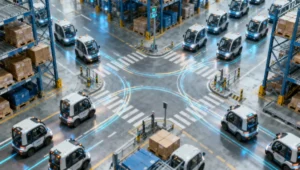
More robots should help warehouses move goods faster. But a larger fleet also creates more activity to watch. A robot can be online and still fail to finish a job. Two can enter the same aisle. A route can change without a clear reason. Across shifts or sites, small problems become expensive. Robot fleet visibility means knowing not just where robots are, but whether they are working as expected and what happened when something changed. Without that view, growth can hide risk.
Why Fleet Growth Can Create Blind Spots
Picture a warehouse that starts with a few delivery robots. One supervisor can check each machine and spot a blocked path. Now imagine several robot types working across multiple zones. Suppliers may use different screens, alerts, and records. Staff switch tools to understand one operation.
That creates four business risks: missed deliveries, longer delays, repeated manual checks, and slow incident reviews. A stalled robot may block another. A task may be marked as started but never finished. If records sit in separate systems, it can be hard to tell when a problem began.
More robots do not automatically mean more output. Fleet management software helps assign tasks and direct movement. But leaders also need oversight: a clear way to see what is happening, notice exceptions, and review the facts later.
What Good Robot Fleet Visibility Should Show
A useful view goes beyond a row of green status lights. It should help an operations leader answer five questions:
- Which robot is involved? Identify the machine, its location, and its current state.
- Is the work getting done? Connect robot activity with completed jobs, delays, and handoffs.
- Where did movement change? Review unusual stops, route changes, or repeated trips.
- What needs attention now? Flag important exceptions instead of flooding staff with alerts.
- What happened earlier? Keep time-based records so teams can check an incident after the shift.
A robot can be connected but idle. A live map may not explain delays. As MiR’s fleet guidance explains, data can reveal bottlenecks and fleet health.
Five Checks Before Adding More Robots
1. Set a clear baseline. Track completed tasks, idle time, blocked routes, and human help requests. NIST’s operational technology guide also addresses system monitoring and risk management. Compare similar shifts and zones. Otherwise, a new problem may look like normal activity.
2. Watch outcomes, not just uptime. Ask whether robots finish the right jobs on time. Review repeated retries and tasks that wait too long. A healthy battery and network connection do not prove useful work is happening.
3. Give every alert an owner. Decide which events need urgent review, who gets notified, and what that person should check. Test alerts against real operations. Too many low-value warnings can hide the ones that matter.
4. Check gaps between vendors. Find out whether systems can share basic data such as identity, location, condition, and availability. The new ISO 21423:2026 standard addresses communication between industrial mobile robots and fleet managers. It is an interoperability standard, not a safety standard. Your team must still check how each system works in practice.
5. Practice an incident review. Choose a past delay and ask staff to rebuild the timeline. Can they find the robot, route, alert, and related records without opening five unrelated tools? If not, fix that gap before the fleet becomes larger.
How V.E.R.O.N. Supports Clearer Oversight
The right approach combines everyday fleet operations with independent checks of robot behavior. V.E.R.O.N. (Verified Robotics Operations Network) provides a verified intelligence layer for robotic environments.
Its capabilities help address key visibility challenges:
- Telemetry Monitoring: Track robot activity and operational data to gain a clearer view of fleet behavior.
- Route Verification: Identify unexpected movement and route changes that may need investigation.
- AI-Assisted Anomaly Detection: Highlight unusual robot behavior so teams can review potential operational problems.
- Operational Audit Trails: Maintain activity records to support incident reviews and accountability.
These capabilities help leaders understand what is happening across their fleets and make better-informed decisions.
Not every unusual route signals a security threat. A blocked aisle, changed task, or system fault may explain it. Human review remains essential. V.E.R.O.N. supports operational oversight without replacing fleet management or robot safety systems.
Grow Your Fleet Without Losing the Full Picture
Before buying the next group of robots, test whether your team can see the work, spot unusual behavior, and explain past incidents. Set a baseline, assign alert owners, and review the gaps between systems. Visibility cannot prevent every problem, but it helps leaders make clearer decisions.
Explore V.E.R.O.N.’s approach to robot oversight or Book a Demo to discuss your fleet’s needs.