The Credentialing Crisis No One Wants to Talk About
Healthcare credential fraud is no longer a rare anomaly; it’s a systemic vulnerability. From falsified medical licenses to misrepresented certifications, the consequences extend far beyond regulatory fines. Patient lives hang in the balance when unqualified practitioners slip through the cracks of outdated verification systems. As the industry accelerates its digital transformation, the question isn’t whether fraud prevention in healthcare credentialing needs an overhaul; it’s whether we’re building the right systems fast enough to matter.
Why Traditional Verification Is Failing
Legacy credentialing workflows were built for a paper-based world. Manual reviews, siloed databases, and fragmented state licensing boards create blind spots that sophisticated fraud exploits with ease. According to recent industry research, the healthcare sector loses billions of dollars annually to fraudulent billing and credentialing, and the pipeline begins with certification.
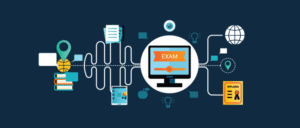
The rise of remote and online certification exams has widened the attack surface. Impersonation, proxy test-taking, and document forgery have evolved in lockstep with digital credentialing platforms. Healthcare credential fraud now demands a smarter, layered response.
AI as the First Line of Defense
Artificial intelligence brings pattern recognition at a scale no human team can match. In healthcare credentialing fraud detection, AI systems can flag real-time anomalies, unusual behavioral patterns during assessments, inconsistencies in identity verification, or document metadata that doesn’t align with submission timestamps.
AI-powered proctoring solutions, for instance, use facial recognition, eye-tracking, and keystroke dynamics to establish behavioral baselines. Any deviation triggers an alert. This continuous, automated monitoring operates without fatigue, bias, or oversight gaps, a critical advantage when credentialing volumes are high and fraud tactics are evolving.
But AI is not infallible. False positives can derail legitimate candidates. Algorithmic bias, particularly in image recognition across diverse populations, remains a documented concern. This is where human oversight becomes not just complementary, but essential.
Human Oversight: The Judgment Layer AI Can’t Replace
Regulatory bodies, accreditation councils, and credentialing officers bring contextual intelligence that no algorithm can fully replicate. When AI flags a suspicious pattern, a trained human reviewer can distinguish genuine technical disruption from deliberate misconduct. This judgment layer protects both institutional integrity and fairness to candidates.
In healthcare, the stakes of wrongful disqualification are high; a nurse wrongly flagged could create a staffing gap in an under-resourced facility. Effective fraud prevention isn’t about maximum automation; it’s about calibrated automation backed by human accountability. The most resilient credentialing frameworks treat AI as a force multiplier for human reviewers, not their replacement.
Building a Synergistic Framework
Leading healthcare organizations are adopting a tiered model: AI handles real-time monitoring and preliminary risk scoring, while human experts conduct secondary review on flagged cases and set policy guardrails. This synergy, often called “human-in-the-loop” AI governance, is gaining traction in identity verification for healthcare and high-stakes licensing domains.
Key pillars of this framework include continuous identity verification throughout assessments, not just at login; audit trails that satisfy regulatory compliance requirements; and cross-referencing credentials against live databases such as the NPDB (National Practitioner Data Bank). When orchestrated cohesively, these elements make healthcare credential fraud significantly harder to execute and easier to detect.
Integrity Is Infrastructure
The future of safe, trusted healthcare begins with who we allow to practice it. Fraud prevention in credentialing isn’t a back-office compliance issue; it’s a patient safety imperative and a public health investment. Organizations that treat credential integrity as infrastructure, rather than an afterthought, will be better positioned to scale their workforce responsibly in an increasingly digital world.
AI and human oversight aren’t competing forces in this effort. When thoughtfully integrated, they are the most powerful defense the healthcare industry has against those who would exploit the credentialing process. The synergy isn’t optional; it’s foundational.