A candidate scores 95% on a technical assessment but struggles to explain the answers during an interview. Did they forget what they learned, or did someone—or something—complete the test for them?
This is one challenge facing modern recruitment.
As AI assistants become more capable, AI cheating in job assessments can make it harder to separate genuine skills from unauthorized assistance.
For HR teams, the goal is not to ban every AI tool. It is to create assessments that measure real abilities and provide reliable evidence about candidate performance.
What Is AI Cheating in Job Assessments?
AI cheating happens when candidates use unauthorized artificial intelligence tools to complete assessments or present work that does not reflect their own abilities.
Common examples include:
- AI-generated answers: Using ChatGPT or similar tools to solve assessment questions without permission.
- Hidden AI assistance: Receiving real-time answers through AI overlays or other applications.
- Remote assistance: Allowing another person to provide answers or control the computer.
- Proxy assessments: Having someone else complete the test.
These behaviors can make assessment scores less reliable, especially when employers need to evaluate independent problem-solving skills.
Why AI-Assisted Cheating Matters to Recruiters
A 2026 study published in the International Journal of Selection and Assessment examined generative AI use across two large applicant samples.
Researchers found that self-reported AI assistance increased between 2024 and 2025. They also found that clear warnings reduced reported unauthorized AI use.
The findings highlight an important lesson: assessment integrity requires both clear rules and effective controls.
Without them, hiring teams risk confusing AI-generated performance with actual job readiness.
Five Practical Controls for AI Cheating in Job Assessments
1. Set Clear Rules for AI Assistance
Not every use of AI is cheating.
For example, using AI may be acceptable when the job itself requires working with AI tools.
Before an assessment, explain which resources candidates may use, what assistance is prohibited, and how violations are reviewed.
2. Design Assessments Around Real Skills
Generic questions are easier to answer using AI.
Instead, use practical tasks, role-specific problems, and questions requiring candidates to explain their decisions.
EEOC guidance emphasizes that employment assessments should be job-related and appropriate for their intended purpose.
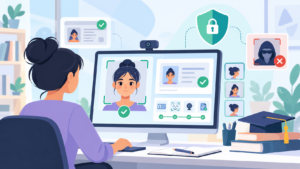
3. Verify Candidate Identity
An accurate assessment score is less meaningful if someone else completed the test.
Confirm candidate identity before testing and reconnect that identity to later interviews.
This helps reduce proxy testing and identity substitution.
4. Monitor Applications and Assessment Activity
Browser-only monitoring can have limited visibility into activity outside the test window.
OS-level monitoring provides additional insight into running applications, remote-access tools, and potentially unauthorized software.
When appropriate, secondary-camera monitoring can add visibility into the candidate’s physical environment.
5. Review Evidence Before Flagging Misconduct
An unusual application, camera movement, or interrupted connection does not automatically prove cheating.
Review the full assessment, relevant recordings, activity events, and candidate explanations.
Human judgment remains essential.
How MeritClaw Helps Protect Assessment Integrity
MeritClaw brings assessment monitoring, candidate identity verification, and integrity reporting into a connected hiring workflow.
Its capabilities address several important risks.
OS-Level Monitoring
MeritClaw’s native monitoring can examine supported system activity, including running applications and remote-access software.
This provides greater visibility than relying only on browser activity.
Dual-Camera Monitoring
MeritClaw supports a laptop webcam and smartphone camera connected through a QR code.
The additional view helps recruiters review activity that may happen outside the main webcam’s field of vision.
Identity Continuity
MeritClaw establishes a facial reference and rechecks the candidate’s identity before assessments and interviews.
This helps connect performance evidence to the same individual across hiring stages.
AI-Assisted Assessments and Integrity Reports
The platform supports assessments linked to job requirements, alongside assessment results and integrity indicators.
Recruiters can review relevant incidents, supporting evidence, and candidate performance rather than relying on a single score.
Connected Hiring Workflow
MeritClaw links resume analysis, JD Fit and Authenticity indicators, monitored assessments, and interview verification.
It can operate as a standalone hiring platform or connect with supported applicant tracking systems.
Built on Proctortrack’s exam integrity technology, MeritClaw draws on a foundation of more than 13 years and 15 million secure exam sessions.
Its key differentiator is combining candidate evaluation with evidence about how the assessment was completed.
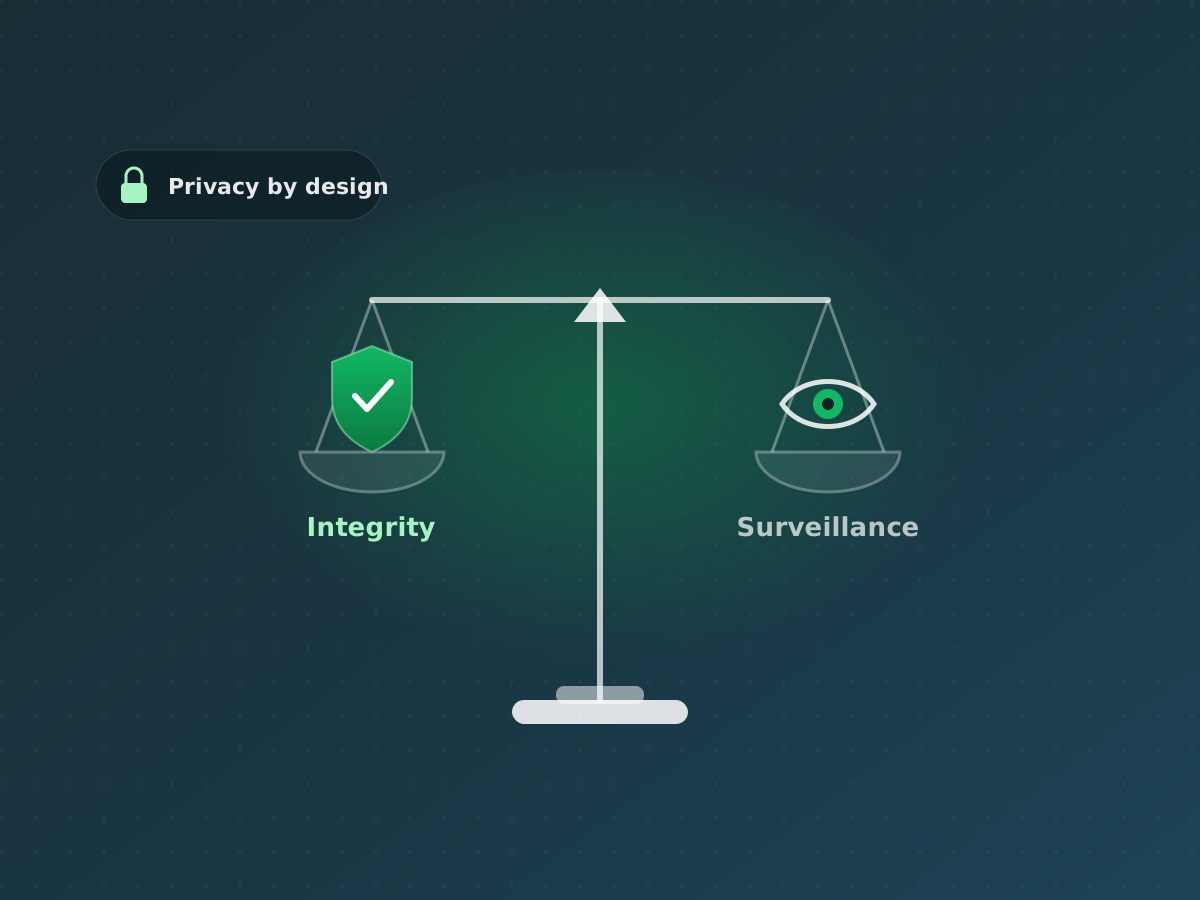
Balance Assessment Security With Candidate Privacy
Stronger monitoring also creates responsibilities.
Recruiters should explain what is monitored, obtain required consent, provide accommodations, and limit access to sensitive information.
MeritClaw’s Privacy Policy states that integrity alerts support human review rather than automatic hiring decisions.
Its Data Retention Policy describes how session recordings, identity references, and integrity records are stored and deleted.
These safeguards matter because assessment integrity should build trust, not create unnecessary suspicion.
Final Thoughts
AI cheating in job assessments requires more than better detection software.
HR teams need clear AI-use policies, meaningful skills tests, consistent identity checks, and evidence-based reviews.
By combining practical assessment design with connected integrity monitoring, employers can evaluate real abilities more confidently while respecting legitimate candidates.
Explore MeritClaw’s assessment integrity capabilities or request a demo to learn more.