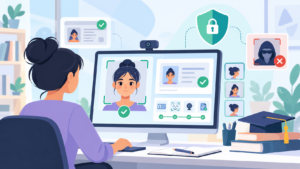
A polished resume once helped recruiters spot strong candidates. Today, AI can help anyone create an impressive application in minutes. But how can recruiters know which claims are true?
AI hiring fraud is becoming a growing concern as false work histories, inflated skills, fake identities, and AI-assisted interviews make candidate screening more difficult.
Recruiters need more than impressive resumes. They need reliable ways to verify experience, confirm identity, and assess real skills without making hiring unnecessarily difficult for genuine candidates.
What Is AI Hiring Fraud?
AI hiring fraud involves using artificial intelligence or other technology to misrepresent a candidate’s identity, experience, qualifications, or abilities.
Common examples include:
- Fabricated experience: Invented achievements, projects, or qualifications.
- AI-assisted misrepresentation: Using AI to answer questions about skills the candidate does not possess.
- Proxy interviews: Another person completing an interview or assessment.
- Deepfake impersonation: Manipulated video or audio used to disguise someone’s identity.
These risks are not purely theoretical. In an October 2026 advisory, the FBI warned that fraudulent remote IT workers were using stolen identities and third parties to attend interviews.
However, using AI to improve a resume is not automatically fraud. The real concern is whether the information is accurate and the candidate can demonstrate the claimed abilities.
How Recruiters Can Verify Candidate Claims
1. Compare Resume Claims With Job Requirements
Start by identifying the experience and skills essential to the position.
Instead of relying on keywords, examine whether the candidate can explain their responsibilities and achievements.
For example, if someone claims experience managing cloud infrastructure, ask about the systems they managed, problems they solved, and decisions they made.
MeritClaw supports this process through AI-assisted resume analysis and job-description matching. Its JD Fit Score helps recruiters evaluate role alignment, while its Authenticity Score provides a separate signal for reviewing candidate claims.
These indicators support investigation rather than proving that a resume is genuine or fraudulent.
2. Verify Skills Through Relevant Assessments
A resume shows what someone claims to know. A practical assessment helps demonstrate what they can actually do.
Recruiters should use job-related tasks and ask candidates to explain their reasoning.
MeritClaw supports AI-assisted assessment generation based on job requirements. Its assessment workflows help recruiters evaluate relevant skills while gathering additional evidence about assessment integrity.
This makes candidate evaluation more meaningful than relying on resume screening alone.
3. Maintain Candidate Identity Across Hiring Stages
Verifying a candidate once does not prove the same person completes every later stage.
A genuine applicant could submit an application while another person attends an assessment or interview.
MeritClaw addresses this through identity continuity, verifying a candidate’s face against an established reference at different hiring checkpoints.
This helps connect the application, assessment, and interview to the same individual, reducing reliance on a single verification event.
4. Check for Unauthorized Assistance During Assessments
Traditional browser monitoring may have limited visibility into activity outside the browser.
Candidates could potentially use unauthorized AI assistants, remote-access software, or other applications during assessments.
One of MeritClaw’s key differentiators is OS-level monitoring, which provides visibility into supported running applications and system activity during monitored sessions.
The platform also offers dual-camera monitoring, connecting a laptop webcam with a smartphone camera to provide additional visibility into the assessment environment.
These controls help identify suspicious activity for review, but no monitoring system can guarantee detection of every cheating method.
5. Strengthen Live Interview Verification
Remote interviews create opportunities for hidden assistance and identity substitution.
MeritClaw supports monitored interview workflows with Zoom and Google Meet.
Its live HR dashboard can display webcam, screen, secondary-camera, and running-application information during supported sessions.
Recruiters can review relevant integrity events while interviewers focus on the conversation.
This combines structured interviewing with additional evidence rather than relying entirely on what appears on camera.
6. Review Evidence Before Making Decisions
One suspicious event should never automatically disqualify an applicant.
Recruiters should consider interview answers, assessment performance, verified qualifications, and explanations for unusual activity.
MeritClaw combines JD Fit, Authenticity, Assessment, and Integrity indicators to support human evaluation.
Its Privacy Policy confirms that the platform produces decision-support signals rather than automated hire-or-reject decisions.
What Makes MeritClaw Different?
Many hiring processes rely on separate tools for resume screening, assessments, interviews, and identity checks.
MeritClaw takes a connected approach by supporting verification throughout the hiring journey.
Its key strengths include AI-assisted resume probing, identity continuity, job-related assessments, OS-level visibility, dual-camera monitoring, and live integrity reporting.
Recruiters can also use the platform as a standalone hiring hub or explore integration with existing applicant tracking systems.
MeritClaw builds on Verificient’s Proctortrack technology, developed through more than 13 years of exam integrity experience and over 15 million secure sessions.
The value is not one score or monitoring feature. It is the ability to review different forms of evidence within a connected workflow.
Make Candidate Verification Fair and Responsible
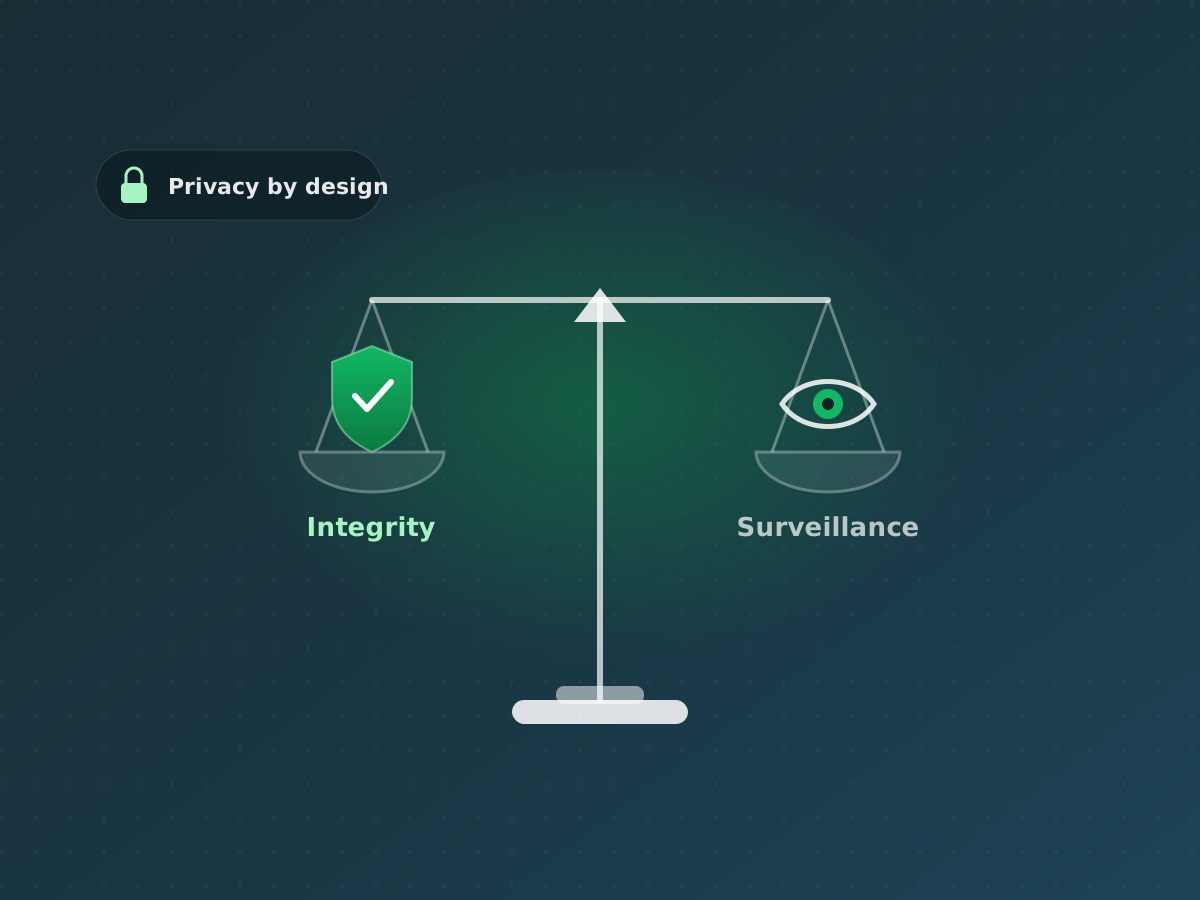
Strong verification should protect both employers and legitimate applicants.
Explain monitoring requirements clearly, collect only necessary information, provide reasonable alternatives, and review potential false alerts.
The EEOC’s guidance on employment testing emphasizes that selection methods should be job-related and used fairly.
When third-party background reports are involved, employers should also follow applicable FTC background-check requirements.
Final Thoughts
AI hiring fraud cannot be addressed by resume screening alone.
Recruiters need a consistent process that verifies candidate claims, tests real skills, confirms identity, and supports informed human decisions.
By connecting these steps, organizations can build greater confidence in their hiring process without treating every applicant as suspicious.
Explore MeritClaw’s hiring integrity capabilities or request a demo to learn how its verification workflow works.