The Role of AI in Securing Remote Assessments
Online assessments have become an essential part of modern education, professional certification, recruitment, and workforce training. As organizations move testing environments online, ensuring that assessments remain secure, fair, and reliable has become increasingly important.
Traditional exam security methods were designed around physical classrooms, where invigilators could directly observe candidates. Remote assessments require a different approach.
This is where artificial intelligence is changing the way organizations protect online exams.
The Growing Need for Smarter Assessment Security
Remote testing provides flexibility and accessibility, but it also creates security challenges that are difficult to address through traditional methods alone.
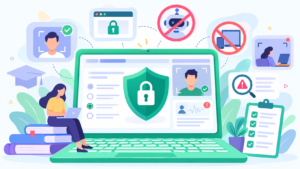
Organizations may need to identify risks such as:
- unauthorized assistance,
- candidate impersonation,
- suspicious behavior,
- prohibited resources,
- unusual activity during an examination,
- and attempts to bypass assessment controls.
Manually reviewing every part of a remote assessment can be time-consuming and difficult to scale.
AI-powered technologies can help organizations identify potential risks more efficiently while allowing human reviewers to focus on situations that require closer attention.
Why Traditional Proctoring Alone Is Not Enough
Traditional online proctoring typically depends on predefined security checks and human observation.
While these approaches remain valuable, large-scale assessments can generate enormous amounts of information for reviewers to analyze.
An AI-supported approach can continuously evaluate relevant signals throughout an assessment and help identify activity that may require investigation.
Instead of treating every candidate or every event in the same way, intelligent monitoring can help organizations prioritize potentially significant incidents.
How AI Supports Remote Assessment Security
AI can contribute to several important areas of online assessment protection.
Identity Verification
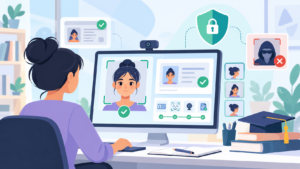
Before an assessment begins, organizations need confidence that the registered candidate is the person taking the exam.
Identity verification technologies can compare candidate information and biometric signals to help establish candidate authenticity.
Behavioral Monitoring
AI-assisted monitoring can help identify unusual patterns during an assessment.
Examples may include unexpected movements, changes in candidate presence, or other activity that differs from normal testing behavior.
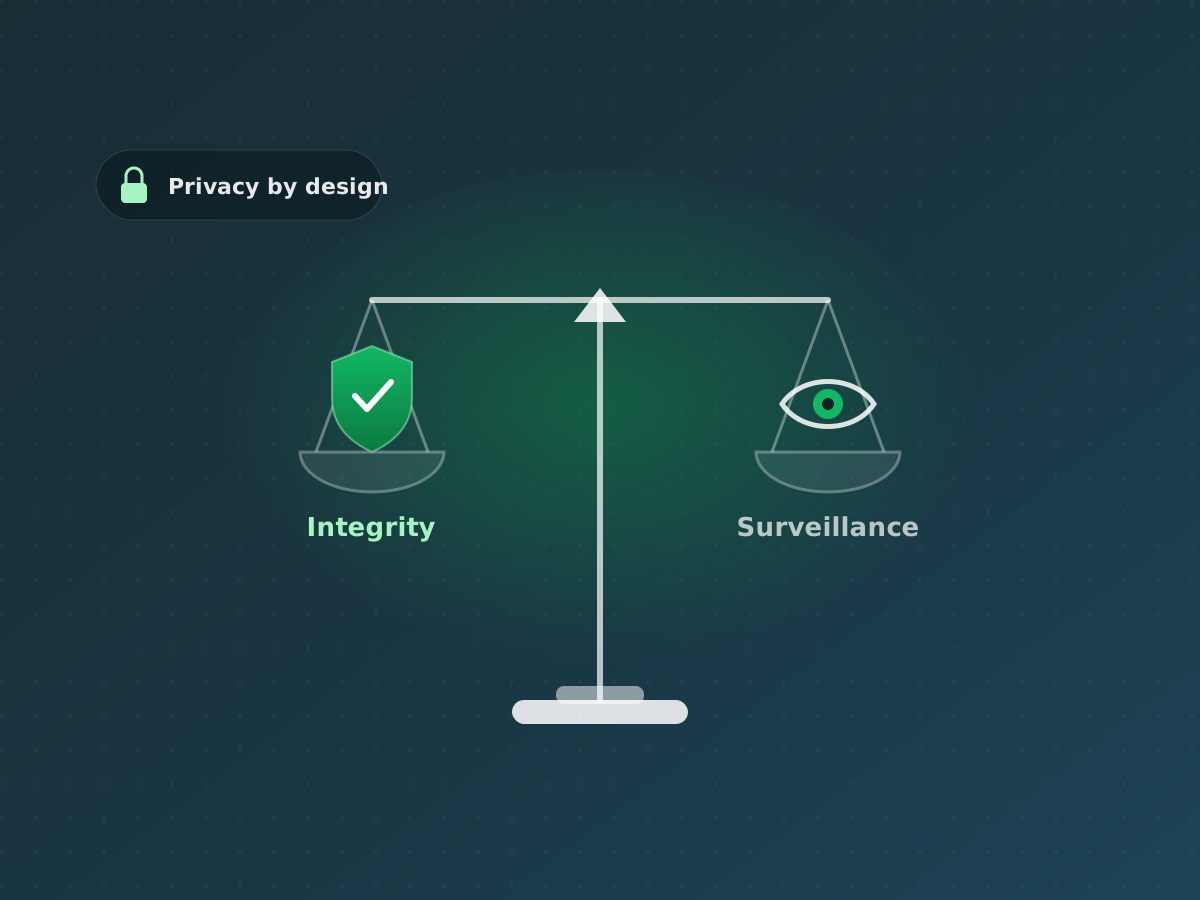
The purpose is not simply to flag candidates, but to provide additional information that can help institutions evaluate assessment integrity.
Browser and Environment Monitoring
Remote assessments can also require monitoring of the digital environment in which an examination takes place.
Secure browser controls and activity monitoring can help restrict unauthorized resources and identify potentially suspicious activity.
Intelligent Risk Detection
One of the major advantages of AI-assisted proctoring is its ability to process large amounts of assessment data.
Instead of requiring human reviewers to manually examine every moment of every exam, intelligent systems can help highlight events that may deserve further attention.
This can make assessment security more scalable.
Combining AI With Human Oversight
AI should not necessarily replace human judgment.
Assessment security involves context, and automated systems may not always understand every situation correctly.
A stronger approach combines technology with appropriate human oversight.
AI can help identify and prioritize potentially significant events, while trained reviewers can evaluate those events in context.
This human-in-the-loop approach can provide institutions with both scalability and informed decision-making.
Protecting the Candidate Experience
Security should not come at the expense of usability.
Candidates expect online assessments to be convenient, accessible, and straightforward.
An effective remote proctoring environment should therefore balance security requirements with a smooth testing experience.
Clear authentication procedures, reliable technology, transparent policies, and appropriate monitoring can help candidates understand what is expected before and during the assessment.
When security processes are designed properly, candidates can focus on demonstrating their actual knowledge and skills.
Why Assessment Data Matters
Modern remote assessments generate valuable information about the testing session.
Organizations may need reliable records to understand:
- when an assessment started,
- how authentication was completed,
- whether unusual events occurred,
- which security signals were detected,
- and whether additional review was necessary.
Maintaining appropriate assessment records can strengthen auditability and help institutions investigate potential incidents when required.
Building a More Trustworthy Online Assessment Environment
AI-powered proctoring is not simply about detecting cheating.
Its broader purpose is to help organizations create assessment environments where results can be trusted.
When identity verification, secure testing controls, intelligent monitoring, and human review work together, institutions can create multiple layers of protection around an assessment.
This layered approach can help reduce security risks while supporting fair and consistent testing practices.
The Future of AI-Powered Assessment Security
As online education, remote hiring, professional certification, and digital examinations continue to expand, assessment security will need to evolve alongside them.
Future assessment environments are likely to place greater emphasis on:
- intelligent identity verification,
- AI-assisted behavioral analysis,
- continuous monitoring,
- secure browser technology,
- human-in-the-loop review,
- and stronger assessment records.
The objective is not simply to monitor candidates more closely.
It is to create assessment systems that are secure, scalable, transparent, and trustworthy.
Final Thoughts
The future of remote assessment security will depend on more than traditional exam controls.
Artificial intelligence can help organizations analyze assessment activity, identify potential risks, and strengthen security across the testing process.
Platforms like Proctortrack bring together identity verification, remote proctoring, secure assessment technology, and intelligent monitoring to help institutions protect the integrity of online examinations.
As organizations continue moving assessments online, combining intelligent technology with appropriate human oversight can help create a more secure and trustworthy testing experience for everyone involved.