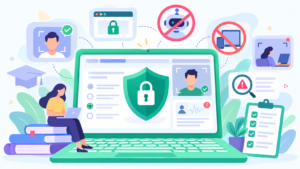
Remote assessments have transformed the way institutions evaluate students, professionals, and job candidates. Flexible testing environments have expanded access to education and certification, but they have also introduced new security challenges.
Most organizations focus on preventing cheating during the exam. They invest in stronger questions, randomized assessments, and time restrictions.
Yet one critical question often remains unanswered:
How can institutions be certain the same verified candidate completes the entire assessment?
Identity verification is no longer just the first step of an online exam. It has become one of the most important factors in maintaining assessment integrity from beginning to end.
The First Misconception: Login Verification Is Enough
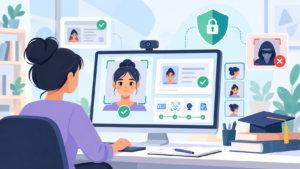
Many online assessment platforms verify a candidate’s identity before the exam begins.
Candidates may upload an ID, capture a facial image, or complete a quick authentication process.
While this creates an important security checkpoint, it only verifies identity at a single moment.
Remote exams often last between one and four hours.
During that time, institutions must consider additional risks such as:
- candidate substitution,
- unauthorized assistance,
- session interruptions,
- or identity changes after authentication.
A secure login alone cannot guarantee continuous exam authenticity.
The Growing Challenge: Trust Must Extend Beyond the First Minute
Traditional classroom exams rely on invigilators who continuously observe candidates throughout the assessment.
Remote assessments require a similar level of confidence.
Without ongoing monitoring, institutions may unknowingly certify results completed under questionable circumstances.
This challenge affects a wide range of industries, including:
- higher education,
- professional certification,
- employee recruitment,
- licensing examinations,
- and workforce compliance testing.
Maintaining confidence throughout the assessment is becoming just as important as verifying identity before it starts.
Why Assessment Integrity Depends on Continuous Verification
Assessment security is no longer limited to preventing access to unauthorized materials.
Today’s institutions must also ensure that the verified candidate remains the active participant throughout the exam.
Continuous identity verification helps strengthen confidence by supporting:
- consistent candidate authentication,
- secure exam environments,
- reduced impersonation risks,
- improved audit readiness,
- and greater trust in assessment outcomes.
Instead of relying on a single verification event, organizations build confidence throughout the entire testing session.
Technology Is Changing How Online Exams Are Protected
Modern remote proctoring solutions combine multiple security layers to support trustworthy online assessments.
These may include:
- secure identity verification,
- facial recognition,
- document authentication,
- browser monitoring,
- AI-assisted behavioral analysis,
- and live or recorded proctoring.
Solutions like Proctortrack help institutions create a secure assessment environment by combining identity verification with continuous monitoring throughout the testing process.
Rather than focusing on only one aspect of exam security, multiple verification layers work together to support reliable assessment outcomes.
Building Trust Beyond Exam Results
Assessment integrity influences much more than examination scores.
Reliable identity verification helps organizations protect:
- academic credibility,
- certification value,
- employer confidence,
- regulatory compliance,
- and institutional reputation.
Candidates also benefit from fair assessments where every participant follows the same verification standards.
When identity verification becomes part of the entire assessment journey, institutions can make decisions with greater confidence.
The Future of Online Assessment Security
Remote learning and digital certification continue to expand across the world.
As online assessments become increasingly common, organizations need security strategies that evolve alongside them.
Future-ready assessment environments will prioritize:
- continuous identity verification,
- intelligent monitoring,
- AI-supported risk detection,
- secure authentication,
- and transparent assessment records.
Technology should not simply make exams easier to administer.
It should make assessment outcomes more trustworthy.
Final Thoughts
The strength of an online assessment is not determined solely by the quality of its questions.
It is determined by the confidence institutions have in the authenticity of every result.
Continuous identity verification helps bridge the gap between convenience and credibility by ensuring the verified candidate remains present throughout the assessment.
Platforms like Proctortrack support this approach by combining identity verification, remote proctoring, and intelligent monitoring into a unified assessment security solution.
As online education, certification, and workforce testing continue to grow, institutions that invest in comprehensive identity verification will be better positioned to deliver secure, fair, and trusted assessments.