Online assessments have entered a new era. For years, online exam security focused on familiar risks such as browser switching, copy-paste behavior, hidden notes, remote access tools, and unauthorized websites. Those risks still exist, but they have now been joined by a more complex challenge: AI cheating in online exams.
With tools like ChatGPT, Gemini, and other AI assistants widely available, students and candidates can generate essays, solve coding problems, summarize concepts, explain formulas, assist with AI SEO optimization, and produce exam-style answers within seconds. This changes the integrity conversation. The concern is no longer only whether a learner can find the answer online, but whether they can outsource reasoning during the exam.
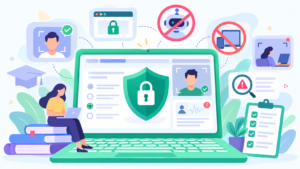
For online learning leaders, assessment heads, higher education institutions, certification providers, and enterprise training teams, this shift calls for a more mature approach to online assessment security. Browser lockdown is still important, but it is not enough on its own. Today’s exam integrity solutions must combine identity verification, secure browser controls, AI-based monitoring, live and automated proctoring, behavioral analytics, and privacy-first compliance practices.
AI Cheating Has Changed Unauthorized Assistance
Traditional cheating often involved searching Google, messaging a friend, or using hidden notes. AI cheating in online exams is different. A candidate can ask ChatGPT to explain a concept, solve a question step by step, rewrite an answer in a natural tone, or generate a full essay response.
This poses a serious academic integrity challenge because the submitted answer may appear original yet not reflect the student’s own understanding.
Proctortrack’s Solution:
Proctortrack helps institutions reduce unauthorized AI assistance by combining browser lockdown, AI-based monitoring, automated and live proctoring, behavioral analytics, and identity verification. This mirrors a broader shift across AI-powered products: raw model output isn’t enough on its own, production systems increasingly need a dedicated evaluation layer that scores results before they reach the end user, the same principle behind an AI quality control system.
Browser Lockdown Is Useful, But Limited
Browser lockdown remains a key part of online exam security. It can restrict unauthorized tabs, search engines, copy-paste actions, external applications, and unapproved websites. But browser lockdown limitations become clear when cheating moves outside the main device.
A locked browser cannot fully control a phone, a tablet outside the webcam view, a smartwatch, or another person in the room. This is why relying only on lockdown technology creates gaps in online assessment security.
Proctortrack’s Solution:
Proctortrack strengthens browser lockdown with additional layers of exam integrity protection. Along with secure browser controls, it supports identity checks, room scans, AI-based monitoring, live proctoring, automated proctoring, and behavior-based review. This layered model helps institutions address risks that browser lockdown alone cannot solve.
Second Screen Cheating Is Harder to Detect
Second-screen cheating has become one of the most difficult challenges for remote proctoring. A candidate may keep the official exam open on one device while using a phone, tablet, second laptop, or wearable device to access AI tools, notes, or messaging apps.
This tactic is difficult to catch because the candidate may appear to be looking at the exam while glancing away, reading from another device, or receiving AI-generated answers off-camera.
Proctortrack’s Solution:
Proctortrack helps reduce second-screen cheating through AI-based monitoring, webcam checks, environment scans, live proctoring, automated proctoring, and behavioral analytics. These capabilities help flag repeated off-screen activity, unusual pauses, suspicious movement patterns, and potential use of unauthorized devices during remote assessments.
Identity Verification Is Now Essential
Academic integrity in remote learning begins with one basic question: Is the right person taking the exam?
In online exams, identity fraud can include impersonation, outside assistance, or someone else completing the assessment on behalf of the registered candidate. For certification providers and enterprise training teams, this risk can directly affect the value of credentials, workforce readiness, and compliance outcomes.
Proctortrack’s Solution:
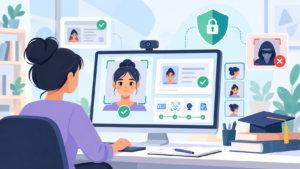
Proctortrack’s identity verification helps confirm the test-taker’s identity before and during the assessment. When paired with browser lockdown, AI-based monitoring, live proctoring, and behavioral analytics, identity verification becomes a critical trust layer in online exam security.
A proactive security approach minimizes the risk of cheating while ensuring a seamless test experience at budget-friendly prices.
Know our Pricing!
Behavioral Analytics Help Identify Risk Patterns
AI-assisted cheating often creates behavioral signals. A candidate may pause for long periods, look away repeatedly, type in sudden bursts, change response speed, or interact with the exam in unusual ways.
These signals do not automatically prove misconduct. However, behavioral analytics can help institutions identify sessions that need closer review. This is especially valuable in large-scale online assessments, where manual observation of every moment is impractical.
Proctortrack’s Solution:
Proctortrack’s AI-based monitoring and behavioral analytics help identify suspicious activity patterns during online exams. These insights support human review, helping institutions make more consistent, evidence-based decisions without relying on guesswork or isolated incidents.
Privacy and Compliance Must Stay Central
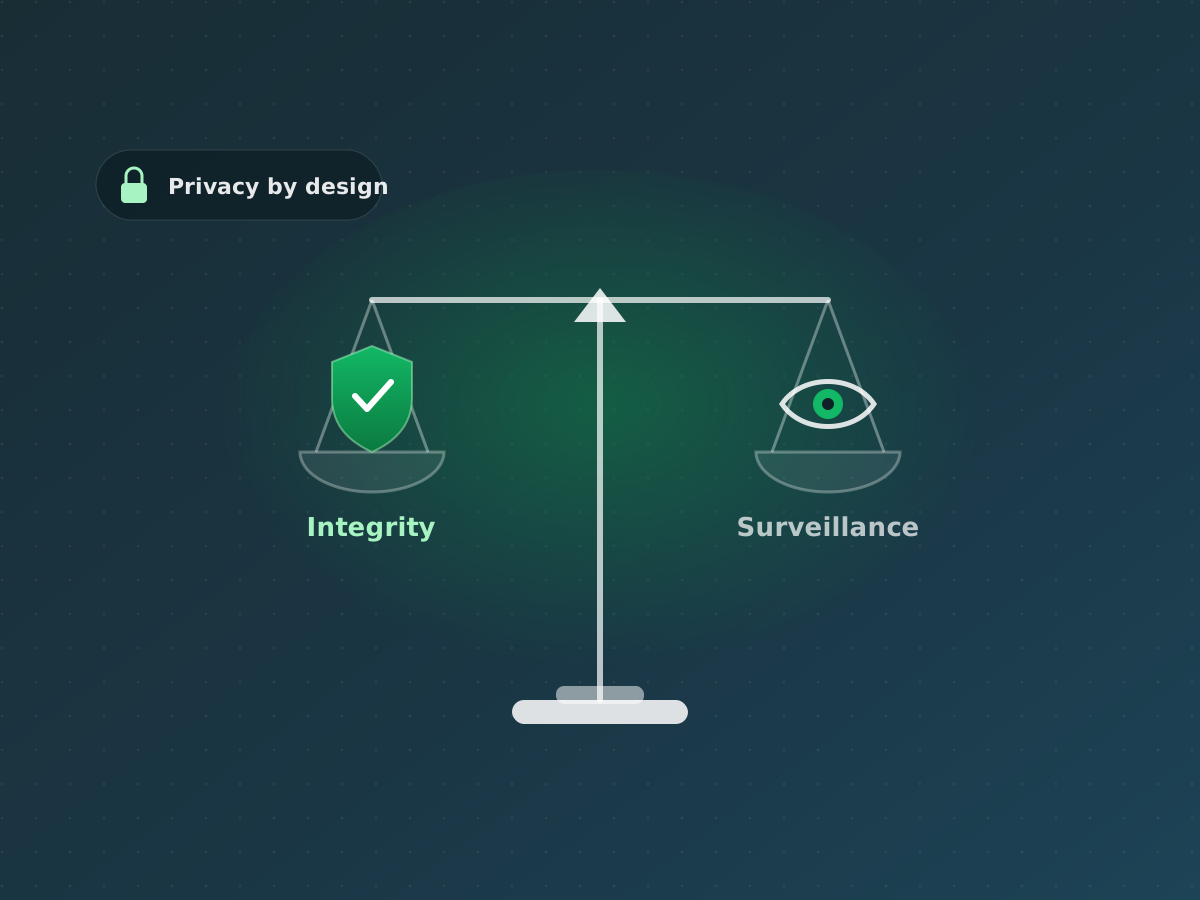
As online exam security becomes more advanced, privacy expectations are rising. Students and candidates want to know how their data is collected, stored, reviewed, and protected. Institutions must balance exam integrity with transparency, proportionality, and compliance-focused security.
Not every assessment needs the same level of monitoring. A low-stakes quiz may require lighter controls, while a final exam, certification test, or professional assessment may require stricter security measures.
Proctortrack’s Solution:
Proctortrack supports scalable, privacy-first online examinations with compliance-focused security. Its mix of automated proctoring, live proctoring, identity verification, browser lockdown, AI-based monitoring, and behavioral analytics helps institutions apply the right level of security to the right assessment risk.
Summing Up
ChatGPT has entered the exam room, but the larger issue is not one AI tool. The real challenge is that answers, explanations, writing support, coding help, and outside assistance are now instantly available.
That reality changes how institutions must think about online assessment security. Browser lockdown remains important, but browser lockdown limitations must be understood. Second-screen cheating requires broader environmental awareness. Remote proctoring challenges require clear workflows, not just more monitoring. AI cheating in online exams requires layered, intelligent, and privacy-aware exam integrity solutions.
For higher education institutions, certification providers, online learning leaders, and enterprise training teams, the path forward is not panic. It is maturity.
Modern exam integrity depends on identity verification, secure exam delivery, AI-based monitoring, behavioral analytics, human review, and compliance-focused security. Proctortrack supports this shift by helping institutions conduct trusted, scalable, and privacy-first online examinations worldwide.
The future of academic integrity in remote learning will belong to institutions that treat exam security not as a single checkpoint, but as an end-to-end trust strategy.