
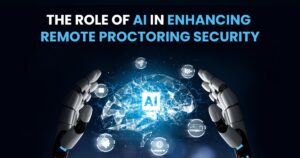
Online Proctoring: Is More Security Really More Intrusive?
How a layered, configurable approach can protect exam integrity without turning online assessment into unnecessary surveillance Online assessment has created an important challenge for universities, certification organizations, and professional testing

AI in Remote Assessment Security: How Intelligent Proctoring Helps Protect Online Exams
Online assessments have changed the way universities, certification providers, employers, and training organizations evaluate knowledge and skills. As remote testing expands, institutions are increasingly looking for ways to protect assessment

AI Cheating in Online Exams: Why Blocking Chatbots Requires More Than a Lockdown Browser
Artificial intelligence has changed the online assessment landscape. Students and test-takers now have access to AI assistants, chatbots, browser extensions, automated search tools, and other technologies that can provide information

The New Exam Black Market How Students Hire Proxy Test Takers Online
The person answering an online exam may not always be the person who registered for it. As remote assessments expand across universities, certification programs, professional training, and corporate hiring, proxy
Why Continuous Identity Verification Is the Missing Layer in Secure Online Exams
Remote assessments have transformed the way institutions evaluate students, professionals, and job candidates. Flexible testing environments have expanded access to education and certification, but they have also introduced new security
How AI Browser Extensions Are Quietly Compromising Online Exam Integrity
For years, maintaining online exam integrity meant restricting access to websites, preventing copy-paste actions, and monitoring browser activity. These methods successfully reduced many traditional forms of online cheating. However, AI-powered
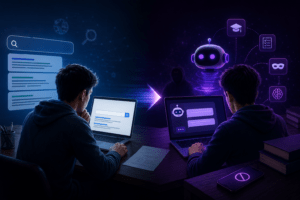
The Shift from Search Engines to AI Cheatbots in Online Exams
For years, online assessment security focused on one primary concern: candidates searching for answers during exams. Institutions responded by restricting browser access, blocking websites, and monitoring search activity to preserve
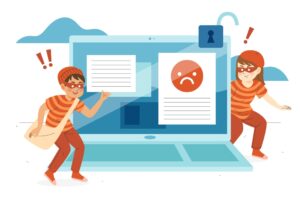
10 Ways Students Are Using AI to Cheat in Online Exams
Second-screen cheating is becoming one of the most difficult challenges in online exam security. A student can remain inside a locked testing browser while simultaneously consulting a smartphone, tablet, external
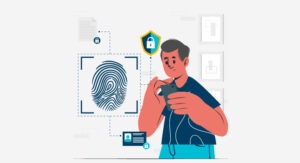
Why Identity Verification Matters More Than Question Difficulty
For years, institutions have responded to cheating by making exams harder. Questions become more analytical, case studies grow more complex, and assessments shift from memorization to critical thinking. Yet one

The Ethics of AI Monitoring in Healthcare Licensing Exams
Healthcare licensing exams do more than evaluate knowledge. They determine whether future professionals are qualified to make decisions that directly affect patient safety. In such high-stakes assessments, integrity is essential.
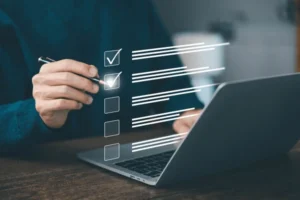
Is Your Online Exam Really Secure? A 10-Point Checklist for Exam Integrity Leaders
Online exams are now central to digital learning, professional certification, workforce training, and large-scale assessment. However, the question for CIOs, CISOs, academic leaders, examination heads, and digital learning teams is
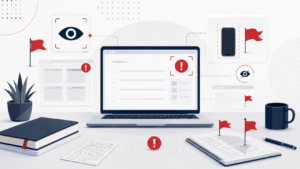
The Invisible Cost of False Positive Cheating Flags
Academic integrity systems are designed to protect fairness. Their purpose is straightforward: identify suspicious behavior, investigate potential misconduct, and maintain the credibility of assessments. But what happens when the system

Credential Fraud Has Entered Healthcare: How AI Proctoring Protects Patient Safety
Healthcare credentialing has entered a new era. For years, credential protection focused on familiar safeguards such as license checks, document verification, background screening, and manual review. Those safeguards still matter,
Why Secure Browsers Are Becoming Essential for Remote Certifications
Remote certifications were designed to make professional credentials more accessible. Candidates can now complete high-stakes exams from virtually anywhere, reducing travel costs, administrative overhead, and testing center dependencies. But convenience
ChatGPT Has Entered the Exam Room: How Proctoring Solutions Are Fighting Back
Online assessments have entered a new era. For years, online exam security focused on familiar risks such as browser switching, copy-paste behavior, hidden notes, remote access tools, and unauthorized websites.
What Happens When Students Use AI Rewriters Instead of AI Generators
Most academic integrity discussions still focus on AI-generated content. Institutions continue building policies, detection systems, and monitoring frameworks around one central concern: students using AI tools to generate answers from
Can Open-Ended Questions Still Be Outsourced in Real Time?
Open-ended questions were once considered the safest format in digital assessments. Unlike multiple-choice tests, they demanded interpretation, reasoning, and originality. Institutions believed they were harder to automate, harder to predict,
Why Low-Bandwidth Exam Sessions Create High-Risk Integrity Blind Spots
Low-bandwidth exam sessions are often treated as technical inconveniences. In reality, they are integrity risks disguised as connectivity problems. As remote assessments become central to education, certifications, and workforce evaluations,
The “Second Screen” Problem in Online Exams: Why Browser Lockdown Alone Is No Longer Enough
Online exams are now a normal part of education, certification, and workforce training. But as online testing grows, cheating methods are also becoming more advanced. One of the biggest problems
Webcam Anxiety vs Academic Integrity: Where Institutions Miscalculate
Webcam anxiety is often treated as a student comfort issue. In reality, it is an institutional trust issue disguised as a technology challenge. As remote assessments become central to education,