Healthcare licensing exams do more than evaluate knowledge. They determine whether future professionals are qualified to make decisions that directly affect patient safety. In such high-stakes assessments, integrity is essential. But as these exams move online, another question has become equally important: How much monitoring is too much?
AI-powered assessment systems have strengthened the ability to detect suspicious behavior, verify identity, and maintain exam security. At the same time, they have raised concerns about privacy, transparency, and fairness.
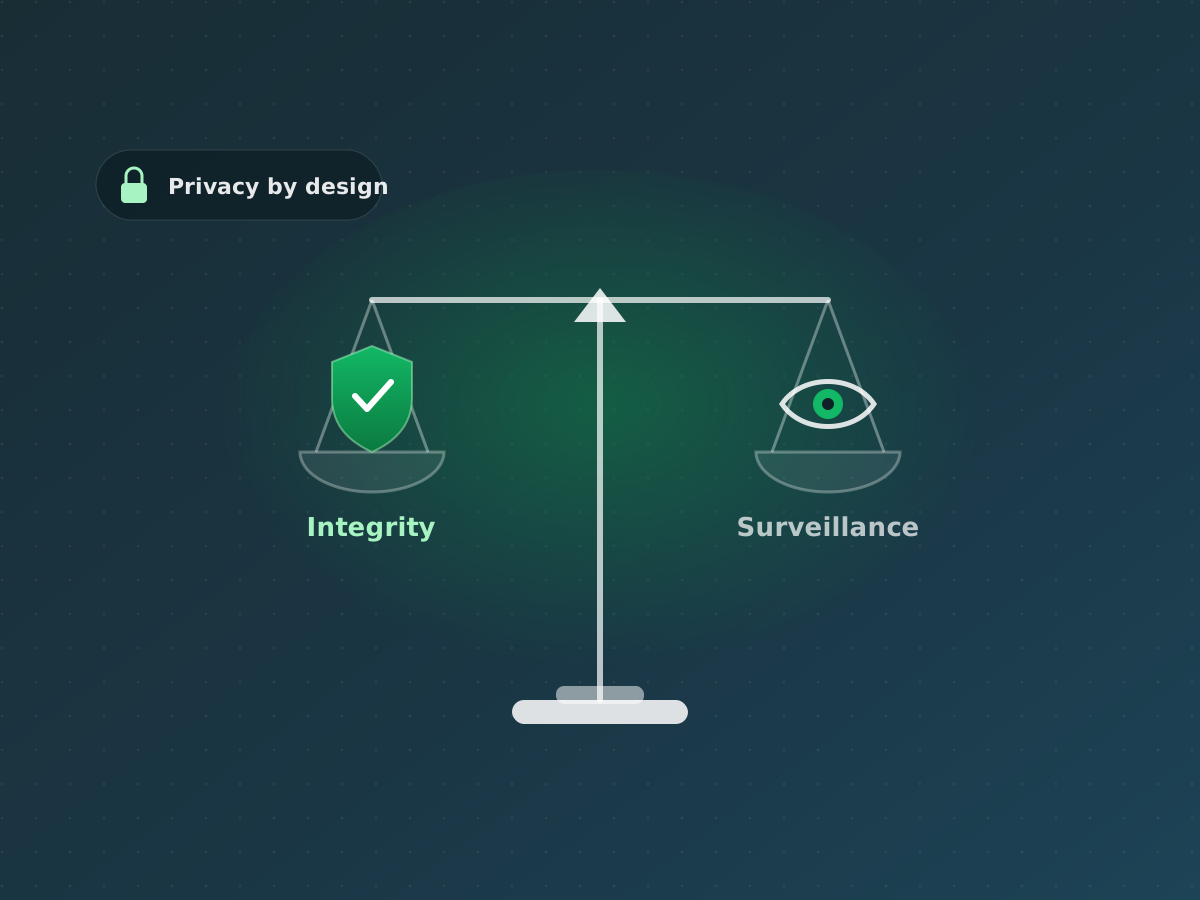
The challenge is no longer choosing between security and privacy. It is finding the ethical balance where both can exist without compromising public trust or candidate confidence.
The First Responsibility: Protecting Public Trust
Healthcare professionals earn public trust through rigorous education and credible licensing.
If licensing exams are compromised, the consequences extend beyond the institution. They affect patients, employers, regulatory bodies, and the reputation of the healthcare profession itself.
This is why healthcare licensing exams require stronger integrity measures than many other assessments.
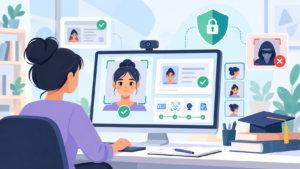
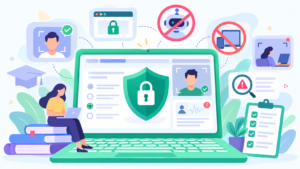
AI monitoring helps strengthen that integrity by supporting:
- identity verification,
- continuous candidate monitoring,
- behavioral analysis,
- and secure testing environments.
These safeguards reduce opportunities for impersonation, unauthorized collaboration, and external assistance during high-stakes examinations.
The goal is not simply to protect the exam. It is to protect the credibility of the professionals who pass it.
The Ethical Challenge: Monitoring Without Overreach
While security is essential, healthcare candidates also have legitimate expectations of privacy.
Many are concerned about:
- webcam recording,
- audio monitoring,
- data storage,
- facial recognition,
- and how assessment data is reviewed.
These concerns become more significant when institutions fail to explain how monitoring technologies operate.
The ethical issue is rarely the technology itself. It is the lack of transparency surrounding its use.
Candidates are far more likely to accept AI monitoring when they understand:
- Why is it required,
- What information is collected,
- Who can access it,
- and when it will be deleted.
Without clear communication, security measures can easily be perceived as excessive surveillance rather than assessment protection.
When Privacy and Integrity Are Treated as Opposites
Many institutions frame assessment security as a trade-off between privacy and integrity.
In reality, both objectives support one another.
An assessment system that ignores privacy risks losing candidate trust.
A system that ignores integrity risks losing public confidence.
Healthcare licensing programs cannot afford either outcome.
Strong governance means collecting only the information necessary to validate assessments while ensuring that candidate data is handled responsibly.
This includes:
- clear privacy policies,
- limited data retention,
- controlled access to recordings,
- and transparent review processes.
Ethical AI monitoring is not about collecting more information. It is about using the right information responsibly.
The Overlooked Detail: Fairness in AI Decision-Making
One of the biggest concerns surrounding AI monitoring is fairness.
Candidates often worry that normal behavior may be misinterpreted as suspicious because of:
- internet disruptions,
- environmental distractions,
- cultural differences,
- or individual testing habits.
AI should never replace human judgment in high-stakes healthcare assessments.
Instead, it should assist reviewers by identifying patterns that require further evaluation.
Human oversight remains essential because licensing decisions affect professional careers and public safety.
The strongest assessment frameworks combine AI efficiency with human review, ensuring that technology supports decision-making rather than making decisions independently.
This balanced approach reduces false accusations while preserving confidence in the assessment process.
The Future of Ethical AI in Healthcare Assessments
Healthcare licensing will continue to expand into digital environments, and AI monitoring will become an increasingly important part of maintaining assessment integrity.
But technology alone cannot build trust.
Candidates expect secure examinations, but they also expect transparency, fairness, and respect for their privacy.
Healthcare organizations cannot afford weak links in assessment integrity or ad creatives. They will establish clear ethical frameworks that explain how technology is used, how data is protected, and how decisions are made. To meet these requirements, many assessment providers collaborate with technology partners such as CISIN to develop secure, scalable, and compliant digital assessment platforms.
Because in healthcare licensing, integrity protects patients.
Privacy protects candidates.
The future of assessment depends on recognizing that both are essential, and neither should come at the expense of the other.