Online exams are now central to digital learning, professional certification, workforce training, and large-scale assessment. However, the question for CIOs, CISOs, academic leaders, examination heads, and digital learning teams is no longer simply: “Can we deliver exams online?”
Instead, the real question is: Is your online exam truly secure, scalable, compliant, and trusted?
Although many institutions have moved assessments online, gaps still remain in identity verification, browser control, candidate monitoring, incident review, data privacy, and audit readiness. As a result, these gaps can weaken academic integrity, expose institutions to reputational risk, and reduce confidence in exam outcomes.
Explore how Proctortrack helps secure online exams: Visit Proctortrack to learn how AI-powered remote proctoring supports trusted digital assessments.
Therefore, use this 10-point online exam security checklist to assess whether your current exam process is built for modern digital assessment—or whether it is leaving critical vulnerabilities open.
1. Do you verify the right candidate before the exam begins?
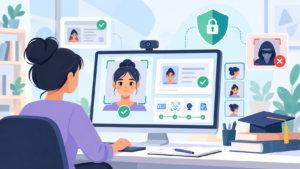
First, a secure online assessment starts with strong identity verification. If your exam process relies only on login credentials, it may not be enough. After all, passwords can be shared, accounts can be compromised, and unauthorized test-takers can enter the process.
Therefore, institutions should seek identity verification that includes ID checks, facial matching, candidate authentication, and re-verification as needed. In this context, Proctortrack supports identity verification as part of a broader exam integrity workflow, helping institutions confirm that the registered candidate is the person taking the exam.
2. Can you prevent unauthorized resources during the test?
Next, browser-based cheating remains one of the most common risks in online exams. For example, candidates may attempt to access search engines, messaging apps, AI tools, notes, screen-sharing platforms, or external websites.
Consequently, a secure remote proctoring solution should include browser lockdown capabilities that restrict unauthorized applications, tabs, copy-paste activity, printing, screen capture, and navigation outside the assessment environment.
3. Are you monitoring behavior, not just recording video?
Moreover, recording an exam is not the same as securing it. Many institutions collect exam footage; however, they may lack the tools to analyze behavior effectively.
That is why AI-based monitoring can help detect suspicious activity, such as unusual eye movements, repeated absences from the screen, additional faces, device use, background noise, or abnormal candidate behavior. In addition, Proctortrack combines AI-powered monitoring with behavioral analytics to help institutions identify risk patterns at scale.
4. Do you support both automated and live proctoring?
Not every exam carries the same level of risk. For instance, a low-stakes quiz may require automated proctoring, while a high-stakes certification, final examination, or entrance assessment may need live proctoring.
Therefore, a mature online exam security strategy should offer flexible proctoring models, including automated, live, record-and-review, and hybrid options. As a result, academic and IT leaders can align exam security with risk levels, budgets, candidate volumes, and compliance requirements.
5. Can your system scale during peak exam periods?
In addition, security often breaks down when systems are under pressure. Semester-end examinations, admissions testing, professional certifications, and enterprise assessments can involve thousands of candidates across time zones.
For this reason, your remote proctoring platform should be built for scalability, with reliable performance, secure exam delivery workflows, and support for global online assessments. Otherwise, exam integrity may depend on manual processes that collapse during peak demand.
Need to plan budget and deployment?
Contact Proctortrack to know pricing for secure online exam proctoring built around your institution’s assessment volume, risk profile, and operational needs.
6. Are suspicious incidents easy to review and audit?
Furthermore, a secure online exam process should not overwhelm faculty, exam administrators, or integrity officers with hours of raw footage. Instead, it should provide flagged incidents, risk indicators, review workflows, and evidence trails.
Therefore, decision-makers should ask: Can our team quickly review suspicious behavior? Can we document findings? Can we support academic misconduct investigations with clear evidence? Most importantly, can we defend exam decisions if challenged?
7. Does your process protect privacy while securing exams?
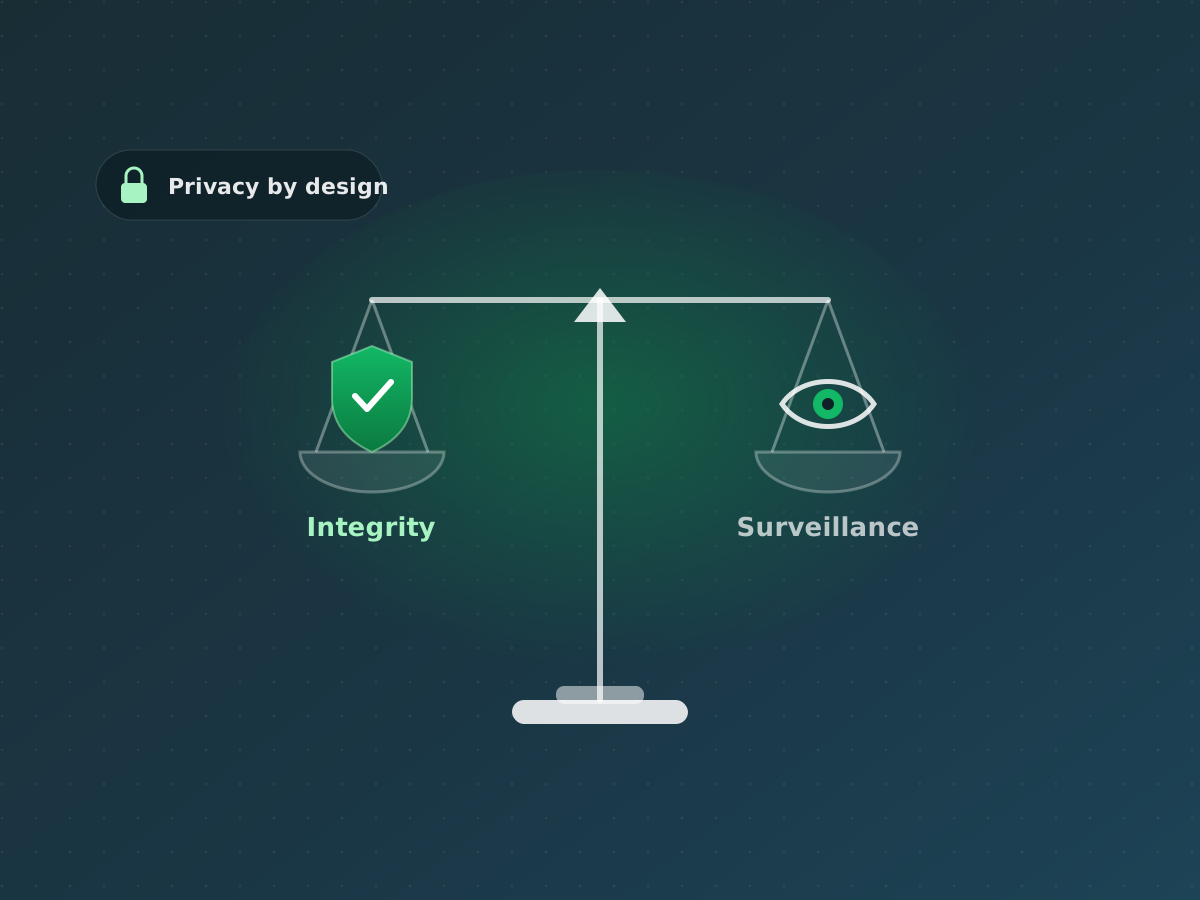
At the same time, privacy-first online proctoring is now a leadership requirement. Institutions must balance exam integrity with candidate rights, data protection obligations, accessibility, and transparency.
Accordingly, your platform should support compliance-focused security, responsible data handling, controlled access, defined retention practices, and clear communication with candidates. In this area, Proctortrack is designed around secure, scalable, and privacy-first online examinations, helping institutions protect both assessment credibility and learner trust.
8. Is your LMS and assessment platform integration seamless?
Meanwhile, security should not create operational friction. If your proctoring workflow is disconnected from Moodle, Canvas, Blackboard, or other learning and assessment systems, administrators may face avoidable complexity.
Therefore, a secure exam process should integrate smoothly with the existing digital learning infrastructure. In turn, this supports IT teams, LMS administrators, faculty, examination offices, and assessment managers without creating unnecessary manual work.
9. Can you detect patterns across exams and cohorts?
Additionally, cheating is not always isolated. Integrity risks may appear across courses, programs, departments, locations, or testing windows. Consequently, behavioral analytics can help institutions move from reactive incident handling to proactive risk detection.
For this reason, leaders should ask whether their current solution provides visibility into repeated violations, unusual exam trends, candidate behavior patterns, and process-level vulnerabilities.
10. Do stakeholders trust the exam outcome?
Ultimately, the true test of online exam security is trust. Students must trust that the process is fair. Likewise, faculty must trust that results reflect genuine performance. Moreover, employers, accreditation bodies, and regulators must trust that credentials are earned honestly.
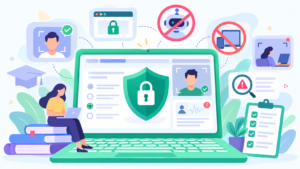
Therefore, a secure online assessment process must bring together identity verification, browser lockdown, AI monitoring, live proctoring, behavioral analytics, audit trails, privacy safeguards, and scalable operations.
Final Thought: Online Exam Security Is a Leadership Decision
In conclusion, online exam integrity is no longer just an academic policy issue or an IT implementation task. Instead, it is a strategic priority for digital education, institutional reputation, compliance, and learner confidence.
If your current exam process cannot answer these 10 questions with confidence, then there may be gaps that expose your institution to risk.
Proctortrack helps educational institutions and enterprises conduct secure online assessments through AI-powered remote proctoring, identity verification, browser lockdown, automated and live proctoring, behavioral analytics, and compliance-focused exam security.
Ultimately, for leaders responsible for digital learning, academic integrity, IT systems, and examination operations, the path forward is clear: secure the exam process before trust is compromised.