As education continues to shift toward digital platforms, online exam proctoring solutions have become essential for maintaining academic integrity in remote learning environments. However, this shift has also raised an important question:
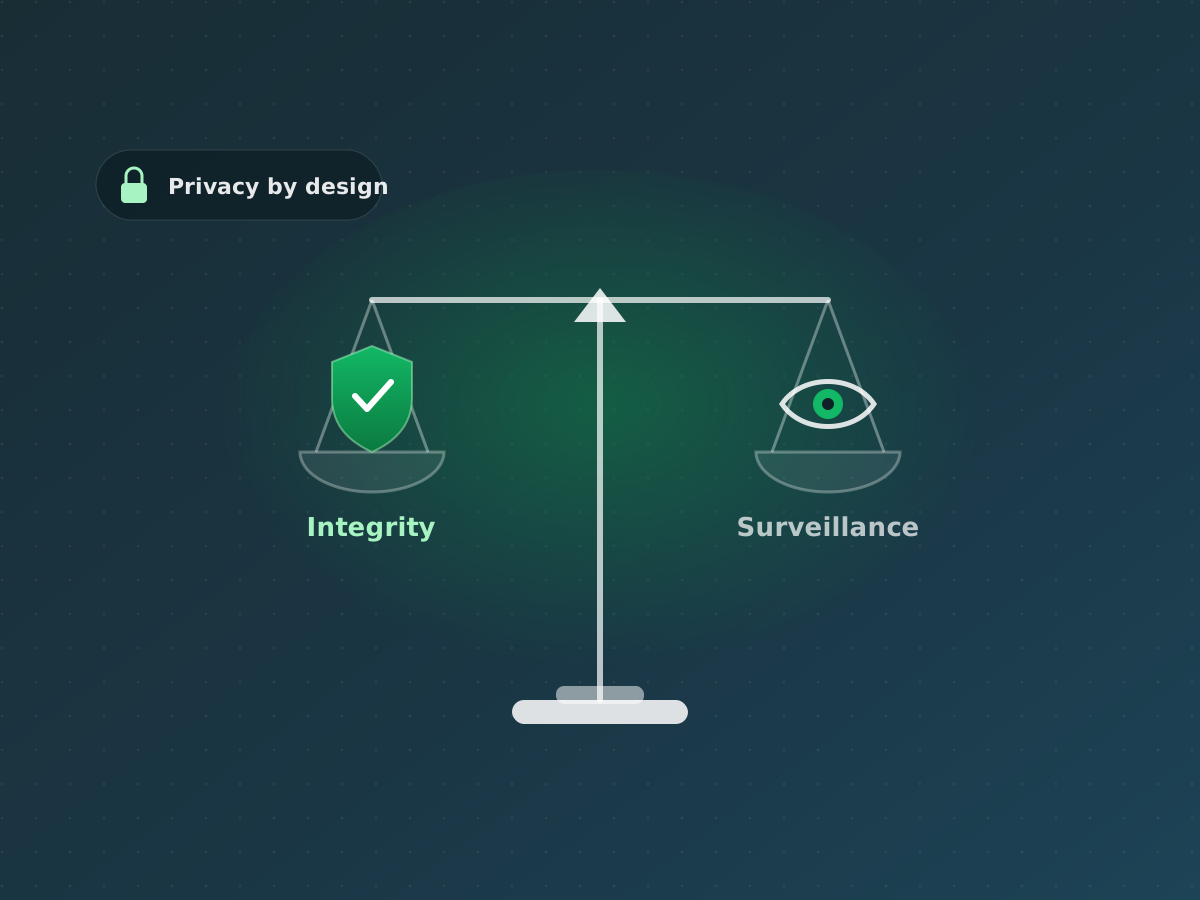
Are students sacrificing privacy for exam security?
This blog explores the balance between privacy and online proctoring systems, and how modern solutions like AI-powered proctoring platforms aim to ensure both fairness and ethical data handling in digital assessments.
The Rise of Online Proctored Exams and Remote Assessment Security
The growth of online education and remote learning has created flexibility but also introduced new challenges in maintaining fair assessments.
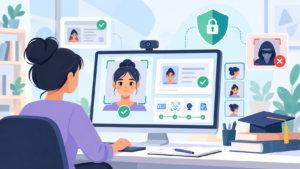
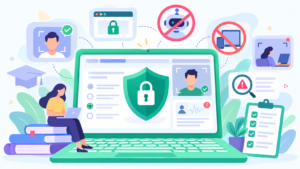
Unlike traditional classroom exams, online proctored exams rely on technology to monitor students during assessments. These systems use:
- Webcam monitoring
- Microphone access
- Screen activity tracking
- AI-based behavior analysis
While these tools help prevent cheating in online exams, they have also raised concerns about student privacy and data security in online assessments.
It is one thing to read about our amazing solution and another to experience it in action.
Book a Customized Demo now!
Modern online proctoring software is no longer just about surveillance it is about ethical monitoring, transparent data usage, and responsible AI-driven assessment systems.
Students today expect privacy-first proctoring solutions that ensure fairness without excessive intrusion.
Platforms like Proctortrack are designed to balance exam integrity and student privacy using transparent and secure monitoring systems.
Understanding the Privacy Debate in Online Proctoring
At its core, online exam proctoring technology involves monitoring student behavior, which naturally raises privacy concerns.
Students often worry about:
- Being recorded inside private spaces
- AI falsely flagging normal behavior
- Storage and usage of personal data
- Who has access to exam recordings and logs
These concerns highlight the need for strong data protection in online exam systems.
Institutions must comply with global privacy regulations such as:
- GDPR (General Data Protection Regulation)
- FERPA (Family Educational Rights and Privacy Act)
This ensures that student data in online exams is collected, stored, and used responsibly.
Modern solutions like Proctortrack online proctoring system address these concerns with:
- Clear consent-based onboarding
- Transparent data collection policies
- Limited and purpose-driven data storage
- Automated data deletion after retention periods
This ensures a balance between remote exam security and privacy protection.
Additionally, flexible hybrid proctoring systems allow institutions to adjust monitoring levels based on exam difficulty, avoiding unnecessary surveillance in low-stakes assessments.
Can We Achieve Both Security and Privacy in Online Exams?
Yes modern technology makes it possible to achieve both secure online assessments and privacy protection when designed responsibly.
Platforms like Proctortrack AI proctoring solution demonstrate that institutions do not need to choose between:
- Exam security
- Student privacy
Instead, they can implement a balanced approach.
Here’s how modern online exam proctoring systems achieve this balance:
Flexible Proctoring Levels
Not all exams require the same level of monitoring.
Modern systems offer:
- AI-only proctoring for low-stakes exams
- Hybrid proctoring for mid-level assessments
- Live proctoring for high-stakes exams
This ensures scalable exam integrity solutions without over-monitoring students.
Data Security and Privacy Protection
Advanced systems ensure:
- Encrypted data storage
- Limited retention of exam recordings
- Secure handling of ID verification data
- User-controlled privacy settings
This strengthens data security in online proctoring platforms.
Transparency and Student Consent
Every AI-based proctoring system begins with clear communication:
- What data is collected
- Why it is collected
- How long it is stored
- How it will be used
This transparency builds trust in online exam monitoring systems.
AI-Powered Integrity with Human Oversight
Modern platforms combine:
- AI-based cheating detection
- Human review of flagged incidents
This reduces false positives while ensuring fair online examination systems.
Importantly, solutions like Proctortrack online proctoring software are designed to adapt across:
- K–12 education
- Higher education institutions
- Professional certification exams
As institutions evolve, the focus is shifting from “Can we monitor students?” to “How can we ensure fair and ethical monitoring?”
Summing Up: Privacy and Proctoring Can Coexist
So, can online exams maintain both privacy and academic integrity?
The answer is yes when supported by ethical AI proctoring systems and transparent policies.
Modern online proctoring solutions ensure:
- Real-time cheating detection
- Secure online exam environments
- Privacy-first data handling
- Flexible monitoring levels
- Compliance with global regulations
The future of online exam proctoring technology lies in balance not surveillance overload.
Platforms like Proctortrack represent the next generation of ethical, scalable, and privacy-conscious proctoring systems, ensuring that exam integrity does not come at the cost of student trust.